Showing posts with label Moyen Âge. Show all posts

Thursday, 23 May 2013

Knights and Statues


A seated statue of St. James has been preserved in the Abbey of Las Huelgas (Burgos), where knights of the Order of Santiago armed themselves. The sculpture’s right arm could be moved by means of a cord, and was used in the ceremony of adoubement in the mid-thirteenth century.  The saint tapped the side of the sword’s blade onto the king’s shoulders when the ceremony was performed, as knighthood could not be conferred by anyone of lower rank. Tradition says that it was the invention of Saint Ferdinand III. Four other kings of Castile were armed in this way, as well as Edward I of England. Afterwards, - on November  1, 1254 - Edward and Eleanor of Castile were married in the Abbey of Santa María la Real de Las Huelgas. 
http://upload.wikimedia.org/wikipedia/commons/a/af/Monasterio_de_Sta._Maria_la_Real_de_Huelgas_-_Marioneta_del_.jpg
 
The main character of The Youthful Deeds of Rodrigo advises King Ferdinand I the Great to be dubbed a knight by St James (in Santiago de Compostela), as the only way to gain authority. Consequently, he would  recognize no authority other than the Apostle’s. Rodrigo mentions the patronage of St. James and the prayer vigil, and tells the king “to arm himself during the Mass.” (“Rey, fasta que non te armases non devías tener reinado; /ca no esperas palmada de moro nin de christiano, / mas ve velar al padrón de Santiago; / quando oyeres la missa, ármate con tu mano (…)” (1) 

There is also another remarkable reference to a statue in this epic poem. The Castilians carved a stone sculpture featuring count Fernán González; then they swore loyalty to it and, therefore, became its vassals. Hence they could not recognise another lord – even the “original” one – until they had broken their symbolic links to the stone.

 “(…) the Castilians (…) / neither kissed his hand nor called him their lord, / as they had paid homage to a stone; they carried it around in a cart / as their lord, until they met the count [Fernán González]” [(…) los castellanos (…) / no l’ bessaron la mano, nin señor no l’ llamaron, / ca avían fecho omenaje a una piedra que traxieran en el carro, / que traían por señor, fasta que fallaron al conde (Fernán González).”] (2)


(1) Épica medieval española (Carlos Alvar, Manuel Alvar eds.); Madrid: Cátedra, 1991, 138, vv. 653-56.

(2) Ibíd., 106, vv. 9-12.

Tuesday, 21 May 2013

Medieval Castile and León: 10 Must-See Places


File:Colegiatasantamarialamayor3.jpg
Church of Saint Mary the Great, Toro (Province of Zamora). 12th - 13th c

                
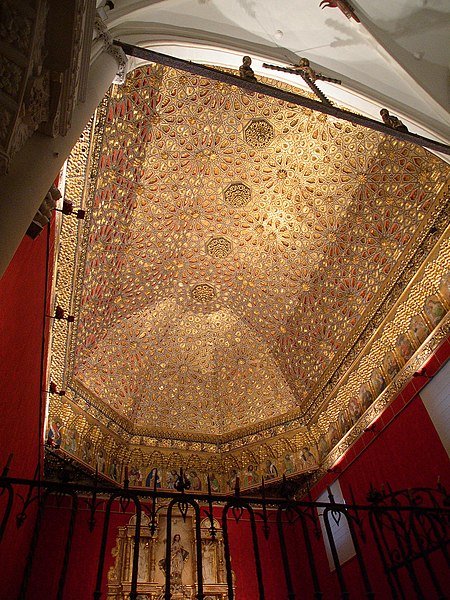
File:Fachada del antiguo Palacio Real de Tordesillas, y rosetón de la iglesia del posterior convento..JPGFile:Las Claras-Artesonado.jpg      


         Royal Convent of Santa Clara, Tordesillas  (Province of Valladolid) 14th c


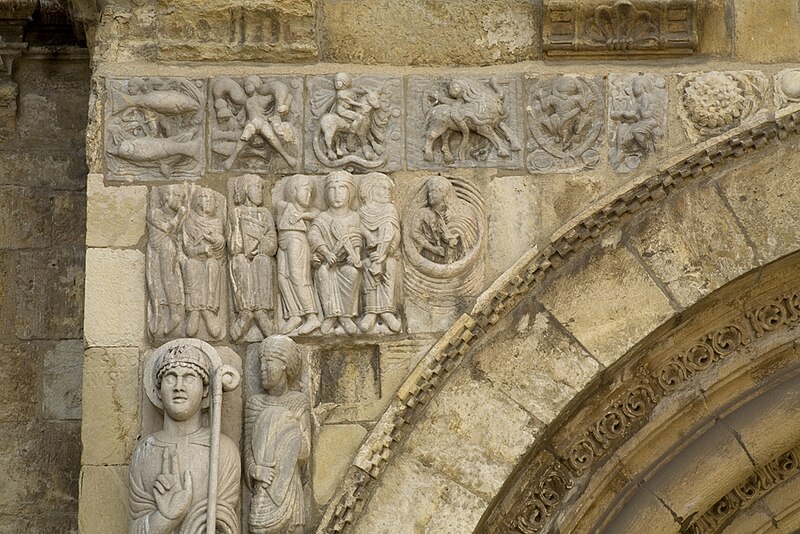
File:León, Colegiata de San Isidoro-PM 34830.jpg


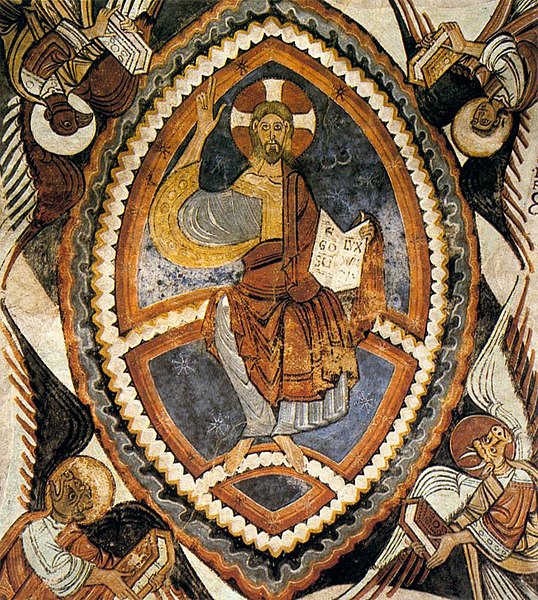
File:12th century unknown painters - Christ Pantocrator - WGA19699.jpg

File:12th century unknown painters - The Annunciation to the Shepherds - WGA19696.jpg


                                   Basilica of San Isidoro, León. 11th -12th c.
                                  http://www.sanisidorodeleon.net/ind_english.html


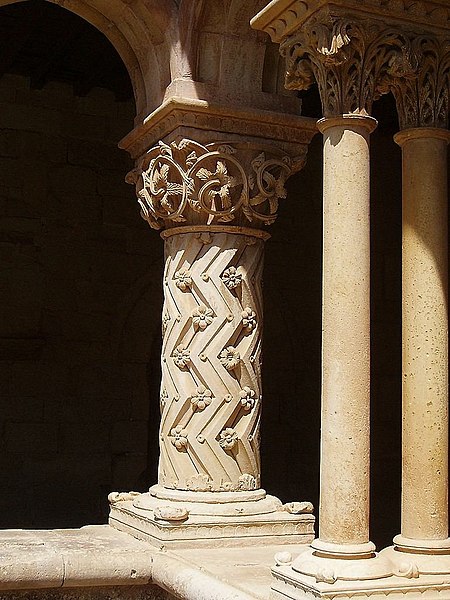
File:Santibañez de Ecla - Mº de San Andrés del Arroyo 03.jpg


File:Santibañez de Ecla - Mº de San Andrés del Arroyo 01.jpg


               Monastery of San Andrés de Arroyo, Santibáñez de Ecla
                                                   (Province of Palencia)
                                                          12th -13th c


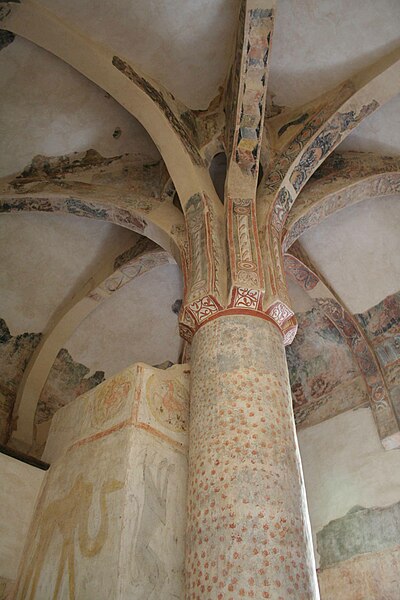
File:San Baudelio Pilar.jpg


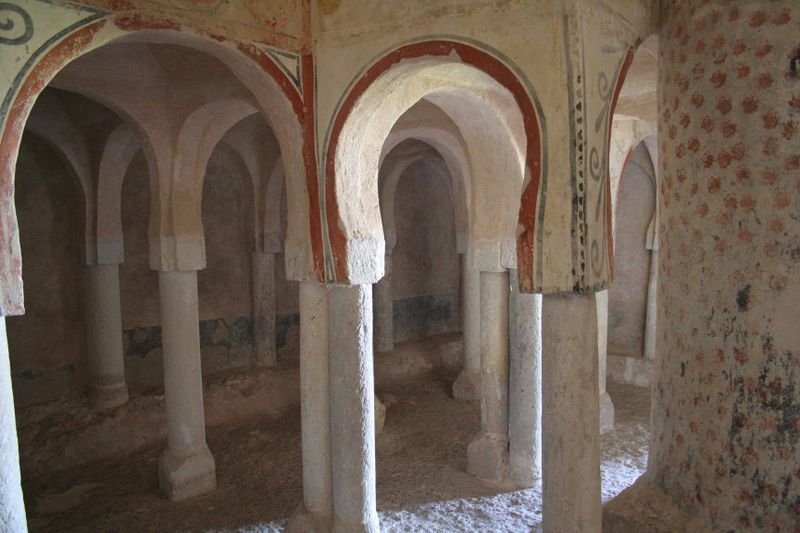
File:San Baudelio Tribuna.jpg
    
   Hermitage of San Baudelio de Berlanga, the Sixtine Chapel of Mozarabic art, 11th c 
                                    (Casillas de Berlanga, Province of Soria)
 http://berlanga.blogia.com/2007/032902-la-palmera-sagrada.php


                      File:Tumbas del Monasterio de las Huelgas.jpg

Abbey of Santa María la Real de las Huelgas, Burgos. 12th c.

The monastery houses the Museo de Ricas Telas, a showcase of medieval textiles.
http://www.monasteriodelashuelgas.org/historia.html
http://www.monasteriodelashuelgas.org/arte.html
http://www.paradoxplace.com/Photo%20Pages/Spain/Camino_de_Santiago/Burgos/SM_Real_Huelgas/Huelgas_Nunnery.htm


 File:Gormaz-puerta.jpg

Gormaz Castle (10th c), a 390-meter- long citadel placed on a hill.
                It was owned by the Cid (ca.1087).
                      (Province of Soria) 
http://www.spain.info/en_GB/conoce/monumentos/soria/castillo_de_gormaz.html


File:Capilla Alcazar Segovia.jpg
     File:Sala Palacio Viejo Alcazar Segovia 1.JPG


             Alcázar of Segovia
                  12th - 16th c


File:Basílica de los Santos Hermanos Mártires-30.JPG
    

                                            Basilica of San Vicente, Ávila. 12th c


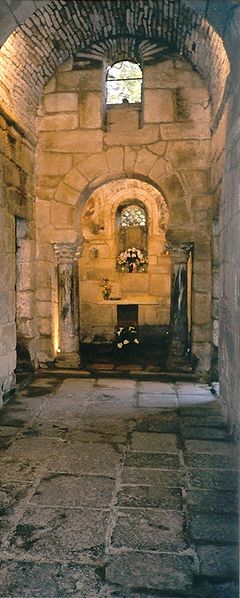
Rupestrian Church of Olleros de Pisuerga (Province of Palencia) 7th- 11th centuries
http://www.arquivoltas.com/8-palencia/02-Olleros00.htm
Map of other hermitages nearby:
http://villacibio.blogspot.com.es/2009/02/ermitas-rupestres-del-alto-ebro-y_1033.html

Wednesday, 30 January 2013

Castles in Spain: History and Legends (I)

                                                       Province of Palencia


File:PlumillaSXIX Castillo de Saldaña 001.jpgFile:UrracaRegina TumboA.jpg
Castle of Saldaña (11th c) It is currently in ruins. 19th c drawing / Queen Urraca of León and Castile. (Tumbo A, 12th c)
Place of death of Queen Urraca of León and Castile (1126). In 1128 the castle witnessed the royal wedding of his son Alfonso VII and Berenguela of Barcelona. A bullfight took place at the Plaza Vieja to celebrate the event. It is the first documentary reference to a bullfight in Spain. The Castle of Saldaña is also the birthplace of Bernardo del Carpio, a hero of medieval Kingdom of Asturias. He was the son of the Count of Saldaña and Dona Ximena. King Alfonso II was not happy with this secret marriage, so he had Count Sancho blinded. He raised the child and ordered not to tell his nephew who his father was. Stories feature him striving against Alfonso to release his father from prison.


Castle of Monzón de Campos
In 1028 Count García was killed on his way to meet his bride in the city of León. He was speared to death by the three Vela brothers, in revenge for an offence against their family. The facts are recounted in the Romanz del Infant García. According to the legend, they sought refuge in the castle of Monzón de Campos, where they were surrounded and executed. 
http://www.monumentalnet.org/castilla_y_leon/palencia/monzon_de_campos/monzon_de_campos/castillo_de_monzon_de_campos.php?vis=11


Palace of Astudillo 14th c
http://www.discoverislamicart.org/database_item.php?id=monument;ISL;es;Mon01;23;es
Pedro the Cruel and María de Padilla built this islamic stylish palace. It houses a Museum of Mudejar art.


ファイル:Ampudia - Castillo 1.jpg
Castle of Ampudia (15th c)
The sons of Francis I of France lodged there as they were held hostage after the Battle of Pavia.
http://galeon.com/castpalencia/ampudia.htm


File:Castillo Fuentes de Valdepero2.JPG
Castle of the Sarmiento family (15th c)

According to the legend, in the past there was an ancient sword whose hilt, wrapped into parchment, was embedded into the wall (SE round turret). It is said it had belonged to Sancho Díaz (Bernardo del Carpios's father). The steel blade projected from the wall; it was the symbol of the lord's jurisdictional rights and perhaps was used in executions. 


Castle of Hornillos de Cerrato
In 1507 Queen Joanna of Castile (Joanna the Mad) took her husband's coffin and had it carried through the fields, as she lodged in the castle, on her way to Tordesillas.
http://hornillosdecerrato.es/index.php/multimedia/castillo/


Castle of Torremormojón (15th c)
It is said that there is a secret tunnel leading from this castle to the castle of Ampudia. It is called "The Star of Campos" (The Star of the Fields), since at the time of Reconquista signal fires were lit in the night to communicate with the nearby castles.
http://www.castillosdepalencia.es/torremor/torremor.htm

Thursday, 24 January 2013

Visigothic Churches in Spain


File:SAN JUAN DE BAÑOS INTERIOR.JPG
Church of San Juan Bautista (Baños de Cerrato. Province of Palencia) (661 AD)


File:SantaCombaBandeInterior1.jpg
Church of Santa Comba (Bande, province of Orense) (7th c)

File:Campillo, Iglesia de San Pedro de la Nave-PM 17876.jpg
Church of San Pedro de la Nave (Province of Zamora) (c. 680 AD)

File:Cripta Visigoda Palencia.JPG
Crypt of San Antolín (Cathedral of Palencia) (7th c)


File:Egara. Sant Miquel.jpg
Baptistery of San Miguel de Tarrasa (Barcelona) (7th c)


File:Santa María de Melque (Toledo) 01.jpg
Church of Santa María de Melque (Province of Toledo) (c. 668-729 AD)
File:Wisig Quintanilla de las Vignas b.jpg
Hermitage of Santa María (Quintanilla de las Viñas, province of Burgos) (7th c)

File:Iglesia Visigoda de San Pedro de la Mata(Casalgordo) 03.JPG
Church of San Pedro de la Mata (Sonseca, province of Toledo)


File:Santa Lucía de El Trampal.jpg
Santa Lucía del Trampal (Province of Caceres)